
How Smart Controllers Improve Barn Environment and Daily Operations
Posted by Posted by and Reviewed by Farmer Boy on Sep 4, 2026
Barn climate shifts throughout the day. Without a way to monitor and adjust for these changes, livestock can struggle with heat or cold stress, leading to less efficient production and potentially higher disease and mortality. Manually adjusting climate controllers throughout the day is one solution to this problem, but it increases labor and utility costs.
This is where adding smart controls to your operation comes in handy. Smart controllers act as the central hub of your barn, automating housing conditions around the clock, and saving time on manual labor.
What is a Smart Controller?
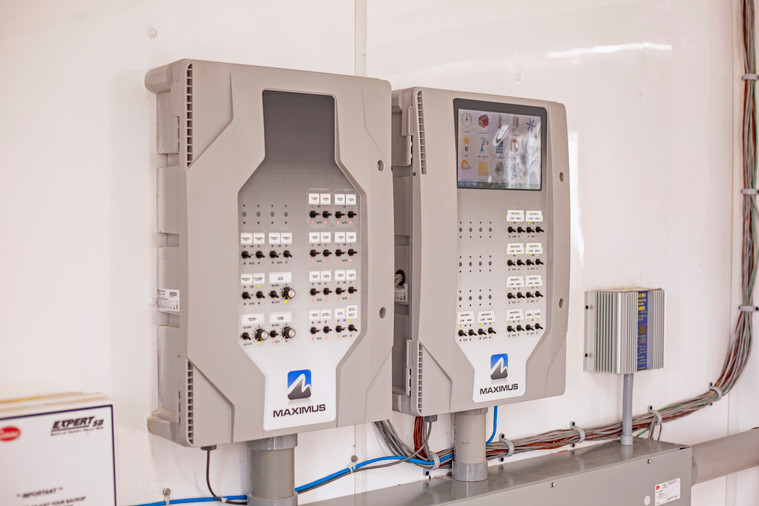
Smart controllers like the Maximus and AP Edge 2 adjust fans, heaters, and lights throughout the day based on your chosen settings. These controllers use integrated sensors to deliver precise, automated management.
Why farmers use smart controllers:
- Real-Time Monitoring & Adjustments: Track live temperature, humidity, and static pressure readings remotely while also receiving instant notifications for power outages or system faults.
- Data Tracking: Smart controllers log conditions over time, making it easier to analyze trends and recurring issues.
- Easy to repair: If a part breaks, you can swap out old pieces with replacement boards instead of buying a whole new controller.
Precision Climate Control: Ventilation and Heating
Heating and cooling your barn requires balance. Smart controllers help manage temperatures by coordinating your exhaust fans, circulating equipment, and heating units to run in seamless stages, keeping indoor temperature and humidity strictly on target.
Why automation is key to climate control:
- Reduces Animal Stress: Eliminates heat spikes or cold drafts, maintaining a steady temperature zone that keeps livestock calm and healthy.
- Superior Air Quality: Automatically manages minimum ventilation rates to continually exhaust excess moisture, dust, and ammonia gas without over-chilling the room.
- Targeted Energy Savings: Prevents your heaters and exhaust fans from running simultaneously. Integrating setpoint devices like the Maximus Controller and AP Edge 2 Controllers allows you to automate stage transitions, making sure that heating and cooling equipment only run when necessary.
Airflow Management: Inlets and Tunnel Doors
Automating your fresh delivery helps function your air inlets and tunnel doors in real time, reacting instantly to outside weather conditions to help maintain airflow throughout your barn.
Why automating airflow management is important:
- Maintains static pressure: Automatically opens or closes inlets so fresh air properly mixes before reaching your livestock.
- Eliminates drafts: Keeps air moving without cold drafts affecting your animals or leaving stale air.
- Smooth weather transitions: Automation helps shift from side ventilation to full tunnel cooling as temperatures rise, keeping animals cool.
Automated Lighting Programs
Smart controllers automate your entire lighting program, adjusting photoperiods and brightness levels automatically throughout the day.
Eliminate inconsistent lighting with automation:
- Supports animal health and growth: Consistent lighting schedules align with natural biological rhythms, reducing stress and encouraging steady feed and water intake.
- Smooth dimming cycles: Simulates natural sunrise and sunset transitions, eliminating sudden light changes and flickering that startle poultry or swine.
- Lowers utility costs: Ensures lights run only when needed and at optimal brightness levels, reducing unnecessary energy consumption across your facility.
Automate Your Barn Environment With Farmer Boy
Ready to upgrade your barn controls? Call the Farmer Boy team at 1-800-845-3374 or browse our selection of Barn Controllers and Accessories to get started.