

PAA or Chlorine? The Best Winter Strategy for Livestock Waterline Biofilms
Posted by and Reviewed by Farmer Boy on Feb 16, 2026
Keeping waterlines consistently clean presents a challenge for farmers, which can lead to various health and production issues. While most attention is given to algae growth in the summer, winter brings its own unique problems, like low flow rates and stagnant lines.
If you are comparing PAA (Peracetic Acid) and Chlorine, we will explain which oxidant is best suited for the winter season and how to select the right products for effective water line management.
Why Winter Poses Biofilm Risk
Waterlines accumulate biofilm year-round, not just in the summer. While warmer weather often accelerates biofilm growth, winter poses a different threat: reduced water flow. Because flocks drink less water in the cold season, the water sits in the lines longer, allowing biofilm to build up within the pipes.
Here’s a look at the damage biofilm creates:
- Vaccine Interference: Biofilm buildup can neutralize water-administered vaccines and medications.
- Shift in Water Temperature: While algae is apparent in the summer, winter biofilms are often more resilient and harder to flush out once they’ve established a foothold during the low-demand months.
- Less Productive: Even if you are using a sanitizer in your waterlines, thick biofilm can protect harmful bacteria from the chlorine or PAA in the water.
To make sure your waterlines are delivering properly, products like the MixRite 2501 Medicator is a great choice for medication dispensers, while the Etatron E128 Medicator Pump offers a water-powered solution specifically designed for antibiotics, vitamins, vaccinations, and more.
How to Remove Existing Biofilm and Prevent it from Returning
Knowing how to remove biofilm is only part of the solution; the main goal is preventing its return. Once biofilm is present, a daily cleaner is insufficient, and a heavy cleaning cycle must be implemented.
- High Power Cleaner: Products containing hydrogen peroxide and peracetic acids, like the CID 2000 will help break down and strip the organic matter from your lines and make your drinkers clear.
- Consistent Maintenance: After the heavy-duty cleaner, you must use products like Free Flow per the operating conditions of your barn (daily, weekly, or even monthly).
- High-Quality Injectors: Having good quality products and injectors designed to handle concentrated solutions will help lessen the risk of biofilm and decrease medication waste.
Understanding Chemistry Basics for Barn Control
The choice between chlorine and PAA depends on understanding your water's organic chemistry and pH level, as these factors significantly affect your water supply.
- Using chlorine: Chlorine is the most common sanitizer, but it’s highly sensitive to pH. For chlorine work correctly, your water pH should be between 6.0 and 7.0. In the winter, it’s recommended to use an acidifier alongside your injector to help lower the pH.
- Peracetic Acid (PAA): Unlike chlorine, PAA isn’t affected by high pH levels like chlorine. It’s also a preferred choice for winter cycles when water flow is low and biofilm is present. PAA stays effective even in tougher water conditions.
We recommend Chlorine if you have a reliable system to monitor and adjust your water's pH. Choose PAA for a powerful, "all-in-one" oxidizing solution that is effective across a wider range of water chemistry.
PAA vs. Chlorination: Which is Best for Cold Water?
Cold water can change how quickly a sanitizer reacts with contaminants, making your choice between PAA and chlorine critical during the winter.
- PAA: This powerful oxidizing solution works exceptionally well in colder temperatures. While some chemicals become less effective when temperatures drop, PAA maintains its high oxidation potential. PAA is best for stripping lines during the change of seasons and clearing stagnant lines during the wintertime.
- Chlorine: Chlorine is a great choice for sanitizing water year-round if your water is already pre-treated and the pH is balanced. While chlorine is a cost-effective option, it simply isn’t as effective as PAA at cutting through biofilm in the winter.
When it comes to choosing between the two, PAA is the clear winner for wintertime—especially if your waterlines need a deep clean.
Building a Winter Water Sanitation Plan
To build a proactive winter sanitation routine, follow these four steps:
- Descale the lines: Use a descaler to remove buildup so that biofilm doesn’t develop and grow.
- High-pressure flush: After a descaler is used, push out the loosened grit by flushing out the system.
- Use a high-concentration treatment: When the barn is empty, run a stronger dose of cleaner through the lines and let it sit. This "soak time" allows the cleaner to eat away at the slime and mineral buildup so it can be easily flushed out later.
- Set a maintenance schedule: Set a recurring schedule for high-flow flushes and consistent low-level sanitizing with an injector so that biofilm doesn't have a chance to return.
Reliable Injectors for PAA and Chlorine: What to Choose
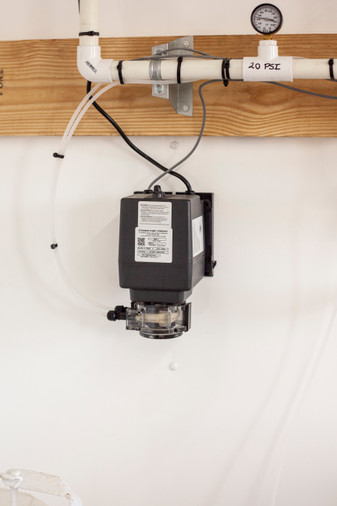
Since PAA and Chlorine are powerful oxidizers, choosing a high-quality, chemical-resistant injector is the best way to ensure your livestock receives a consistent and accurate dose every time. Consider these dependable options for your water-line needs:
- Etatron eOne Chlorinator
- Stenner Pump® Adjustable 110V Pump
- Stenner Pump® Fixed Pump 110 Volt
- Stenner Pump® Control Module for Adjustable Stenner Pump
Waterline sanitation is essential year-round. Proper water treatment in the winter eliminates hidden contamination risks. Whether you are deep-cleaning with PAA or maintaining with Chlorine, the right equipment is crucial for a successful season.
Ready to ensure your water is prepared for the colder months? Shop our latest water treatment products today to keep your animals healthy and hydrated.